Mar 2, 2026 9:58 PM
In Memoriam: John Hammond Jr., 1942–2026
John P. Hammond (aka John Hammond Jr.), a blues guitarist and singer who was one of the first white American…


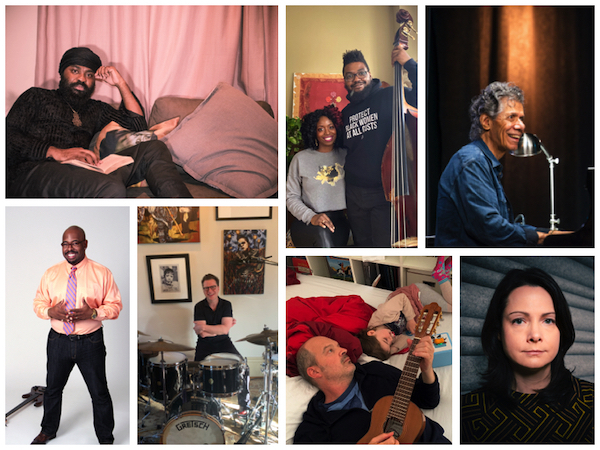
Top row from left: Nduduzo Makhathini (Photo: Nailah Makhathini); Brandee Younger and Dezron Douglas at their home in the East Harlem neighborhood of New York City (Photo: Courtesy of Artists); Chick Corea (Photo: Toshi Sakurai, Courtesy Chick Corea Productions). Bottom row from left: Christian McBride (Photo: R. Andrew Lepley); Stanton Moore at his home in New Orleans (Photo: Lauren Del Rio); Wolfgang Muthspiel and his 4-year-old daughter, Flora, at their home in Vienna (Photo: Courtesy of Artist); Kris Davis (Photo: ©Caroline Mardok).
(Photo: DownBeat Collage)“There is definitely gonna be space for alternatives,” Makhathini said. “So, all of these efforts that we’re seeing on social media, it’s definitely something that we can keep going [after the pandemic]. We’ll reimagine the field—‘the field’ meaning the bandstand. There is a particular way in which human beings imagine gathering; there are different registers of how people gather.”
Along with a reassessment of public spaces, the pianist also foresees a realignment of our interior lives and an adjustment in how performers rely on previously established industry norms.
“There is going to be a shift in terms of how people engage the artist after this—and there’s gonna be new relationships with audiences after this,” Makhathini said. “What we have now as an alternative plan will stay as a parallel sort of reality for artists. People are going to be consciously regarding the online [approach] as an option. So, for instance, there’s gonna be people playing stuff from studios and broadcasting from a studio. When I do my next record, I would love to broadcast the session.”
That idea might have seemed revelatory a few years ago—but it could become the norm after the pandemic. An antecedent arrived in 2017, when bassist and vocalist Esperanza Spalding opened up her life to fans while working on Exposure, streaming 77 hours in the studio and emerging with a recording that displayed not just her musical prowess, but also a meta train-of-thought beyond what most musicians were brash enough to attempt.
Becoming stars of their own movies might not actually be a huge leap for some musicians, though. Most already have at least some experience booking gigs, running bands, arranging recordings and negotiating with everyone from label executives to talent agents and publicists. Livestreaming from the studio would only add one more aspect to their careers, and Makhathini believes the creative set contains multitudes.
“[There] is absolutely no differentiation between being a healer, being an artist, being a dancer, being a diviner—all of these things,” Makhathini said. “There is a kind of totality in them.”
As venues, labels and independent performers scramble to find reliable sources of revenue, it still might be too early to envision some grand structural reorganization in jazz that will prove workable after musicians and fans can safely congregate again. But for now, the loss of gigs, studio sessions and teaching opportunities has forced a reckoning with who we are as individuals and as a society, and who and what we value most.
What we think of as the life of a musician could be profoundly different by 2021.
“We already had to have a lot of skills before—but these are extra skills that we have to learn,” Younger said while discussing the outsized role of livestreams in the current jazz ecosystem.
Douglas noted that negotiating the pandemic should prompt musicians to develop some sort of plan for becoming more self-reliant and visible after the world returns to semi-normalcy.
“I have a hustler’s mentality, so whatever [the scene] is going to be, I’m going to be involved in it,” the bassist said, confidently. “Whether the scene, whether my peers, whether they like it or not—they don’t have to. That’s the beauty of art: You don’t have to appreciate everyone’s art. But you can’t deny it.” DB
This story originally was published in the July 2020 issue of DownBeat.
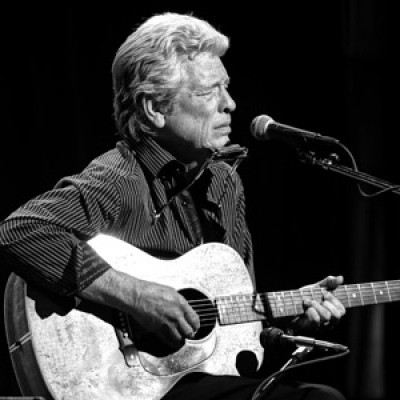
Hammond came to the blues through the folk boom of the late 1950s and early 1960s, which he experienced firsthand in New York’s Greenwich Village.
Mar 2, 2026 9:58 PM
John P. Hammond (aka John Hammond Jr.), a blues guitarist and singer who was one of the first white American…
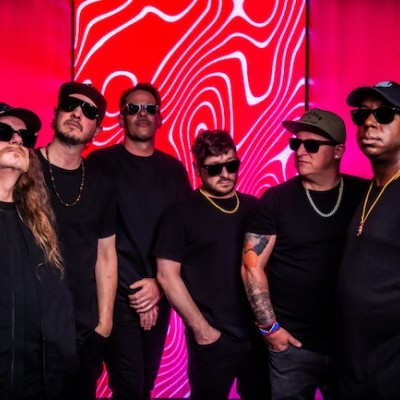
Lettuce, from left: Eric Coomes, Adam Deitch, Ryan Zoidis, Eric Bloom, Adam Smirnoff and Nigel Hall
Feb 17, 2026 11:05 AM
They were Berklee misfits. Neither jazzy enough for the straightahead crowd at Boston’s highly prestigious College of…
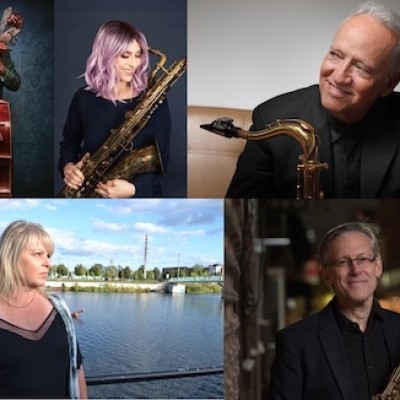
Lovers of the big band experience, clockwise from top left, John Clayton, Leigh Pilzer, Ted Nash, David Pietro and Christine Jensen.
Feb 10, 2026 11:00 AM
The popularity of big band music might have peaked in the 1930s and ’40s, but despite the many changes on the jazz…
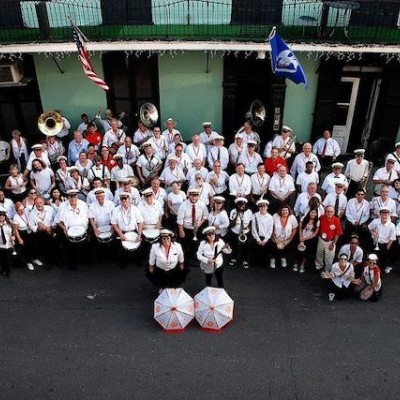
New Orleans Trad Jazz Camp
Feb 19, 2026 10:39 AM
Jazz camps have exploded around the globe as a summertime tradition for working on your chops and making new friends.…
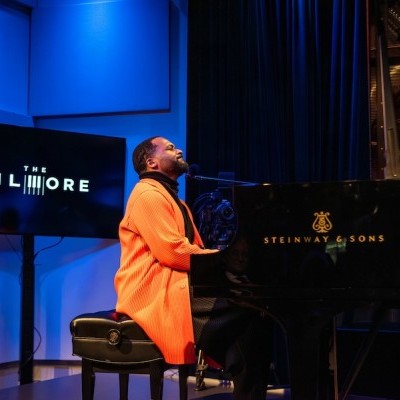
Sullivan Fortner continues a winning streak with his third Grammy for Jazz Album of the Year after earning the Gilmore Larry J. Bell Artist Award last October.
Feb 10, 2026 10:48 AM
The 68th Annual Grammy Awards presented a marathon of winners, tributes and music on Feb. 1. Kendrick Lamar added five…